
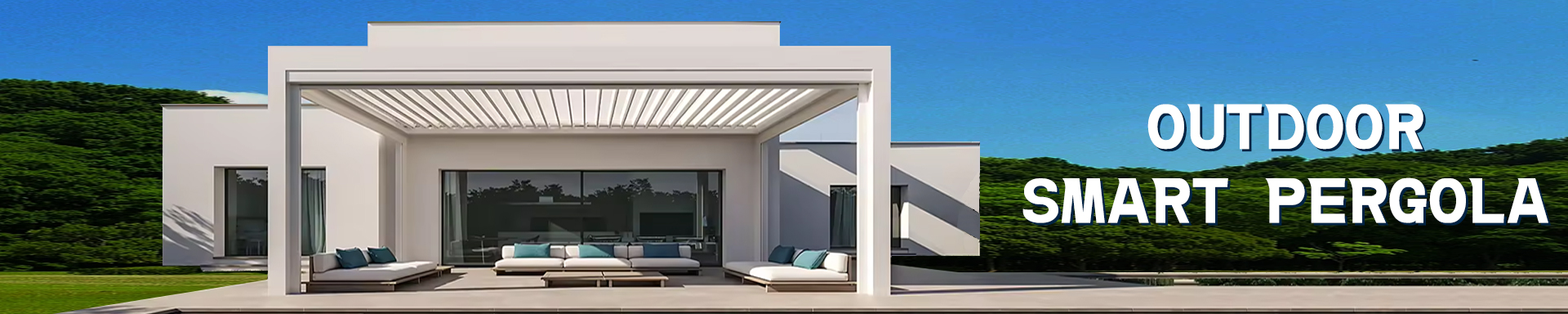
1. Thermal Performance of an Aluminum Pergola House
In hot climates, homeowners often worry about how outdoor structures handle intense sunlight. A well-constructed Aluminum Pergola House significantly reduces heat buildup by combining reflective surfaces, airflow management, and proper roof design. Real-world installations in places like Arizona, Dubai, or southern China show that temperatures underneath these structures can be 8–12°C cooler than under wooden or steel pergolas during peak afternoon sun. Properly designed aluminum pergolas also avoid hotspots, making them comfortable for extended outdoor use even in midsummer.
1.1 How Aluminum Reflects Heat Compared to Wood or Steel
Aluminum’s thermal performance exceeds that of many traditional materials. Its solar reflectance (SR) typically ranges from 0.70 to 0.85, meaning it reflects 70–85% of sunlight, whereas untreated wood often has an SR around 0.20–0.35 and steel about 0.40–0.50. This difference directly affects how much heat transfers to the shaded area beneath. For example, a dark-stained cedar pergola can trap up to 60% more heat than an aluminum counterpart.
| Material | Solar Reflectance (SR) | Heat Retention After Peak Sun |
|---|---|---|
| Aluminum | 0.70–0.85 | Low |
| Steel | 0.40–0.50 | Medium |
| Wood | 0.20–0.35 | High |
These numbers explain why aluminum pergolas remain noticeably cooler under intense sunlight. Properly coated aluminum can further increase reflectivity and maintain a low surface temperature.
1.2 Temperature Control Under Solid vs. Louvered Roof Systems
Roof type greatly affects thermal comfort. Solid aluminum roofs provide full shade but can trap heat unless vented or paired with reflective coatings. Louvered pergolas allow adjustable airflow, letting hot air escape while still providing shade. Studies from residential installations indicate that louvered systems can reduce internal temperatures by an additional 3–5°C compared to solid roofs in direct sunlight. Adjustable louvers also let users balance shade and airflow dynamically, which is crucial for extreme heat zones.
1.3 Impact of Roof Color and Coatings on Heat Absorption
Roof color and surface treatment directly influence the amount of solar heat absorbed. Light-colored or anodized aluminum surfaces absorb less heat, while darker powder-coated finishes may raise temperatures slightly. Homeowners often choose light beige or silver finishes for hot regions, which reduce roof surface temperature by up to 15°C compared with black or dark gray coatings. Aluminum automated pergolas with reflective coatings have also proven effective in high-UV environments, maintaining structural comfort without sacrificing durability. Selecting the right coating not only impacts temperature control but also prevents long-term fading and corrosion.
2. Ventilation, Airflow, and Shade Efficiency
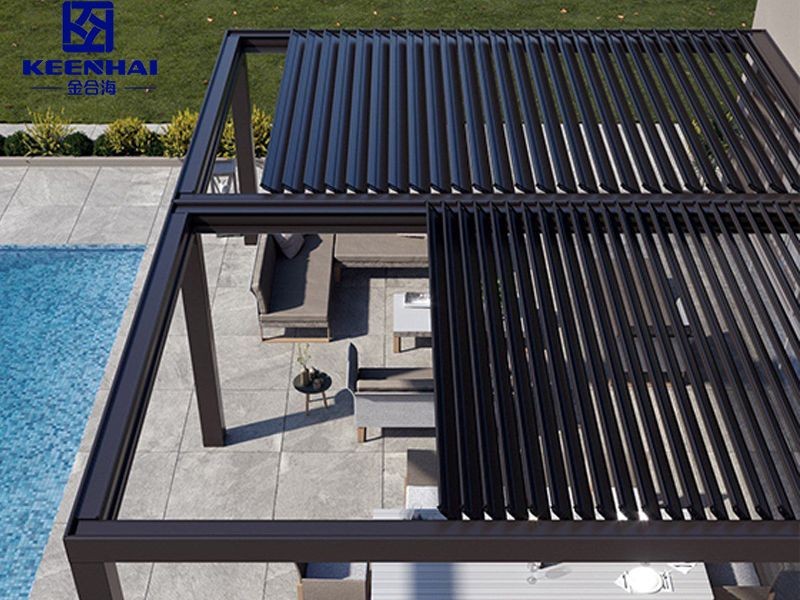
Optimizing airflow and shade is critical in hot climates to maintain comfort under an aluminum pergola house. Properly designed structures combine strategic louver angles, roof spacing, and natural ventilation to reduce air temperature by 5–10°C compared with areas without airflow. Residential installations in southern California and Dubai show that adjustable roofs allow homeowners to control shade and wind passage, keeping patios usable even in peak afternoon heat. Understanding how ventilation interacts with shade efficiency helps you maximize comfort without extra cooling devices.
2.1 Natural Airflow Benefits of Adjustable Louvers
Adjustable louvers create a self-regulating airflow system. By tilting louvers to 15–45 degrees, warm air rises and escapes while cooler air circulates underneath, maintaining a comfortable microclimate. Studies on louvered pergolas show that fully adjustable systems can lower the perceived temperature by up to 7°C in direct sunlight. To achieve optimal airflow:
-
Open louvers fully in the morning for cross ventilation.
-
Adjust mid-day louvers partially closed to block harsh sun but maintain airflow.
-
Close louvers in the evening to trap warmth if needed.
This step-by-step approach ensures a balance between cooling and sun protection while reducing reliance on fans or evaporative cooling.
2.2 Shade Coverage Patterns During Peak Sun Hours
Sun movement drastically affects shade coverage. A fixed pergola may provide inconsistent shade, leaving hot spots in seating areas. Using adjustable or rotating aluminum panels, homeowners can track sun angles and adjust for peak hours between 11 a.m. and 3 p.m., ensuring maximum coverage. Field measurements show that a standard 12×12 ft adjustable pergola can block up to 95% of direct sunlight when oriented correctly, compared with only 65–70% for fixed aluminum roofs. Combining reflective coatings with correct louver angles enhances comfort without altering the structure. Using these adjustments strategically creates a consistently shaded space ideal for outdoor gatherings.
2.3 UV Protection and Reduction of Radiant Heat
Aluminum naturally blocks a significant portion of UV radiation, but coatings and finishes enhance protection further. Powder-coated or anodized surfaces can reduce UV penetration by over 90%, protecting skin and outdoor furniture from damage. In addition, reflective surfaces minimize radiant heat buildup under the roof. For instance, an Aluminum motorized pergola tested in Dubai lowered radiant heat on the patio by 20–25% compared with untreated metal panels. For maximum comfort, combine proper louver angles with reflective finishes to reduce both direct sunlight and radiative heat efficiently.
3. Material Behavior in High-Temperature Environments
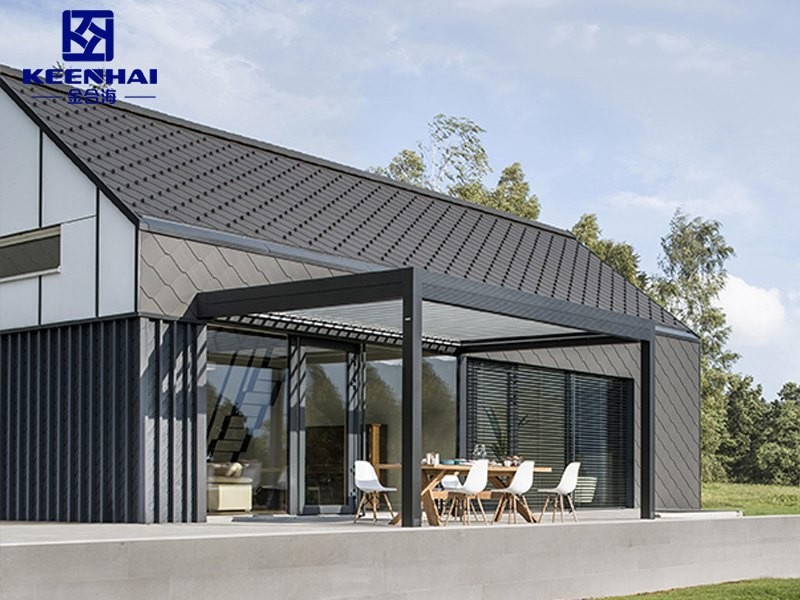
Understanding how materials respond to prolonged sun exposure is essential when choosing a Aluminum pergola house for hot climates. Aluminum’s high heat tolerance and low thermal expansion make it an ideal choice, maintaining structural stability even when daytime temperatures exceed 40°C. Observations from rooftop and patio installations in Arizona demonstrate that properly designed aluminum frames show negligible warping or bending, ensuring long-term durability while supporting adjustable louver systems for optimized airflow.
3.1 Heat Resistance and Structural Stability of Aluminum
Aluminum offers a strength-to-weight ratio unmatched by most outdoor materials. Its melting point exceeds 660°C, far above typical environmental temperatures, meaning the framework remains stable in extreme heat. Key considerations for maintaining structural integrity include:
-
Selecting the correct aluminum grade, typically 6061-T6, for optimal load-bearing performance.
-
Using thicker profiles for posts and beams in regions with sustained high sunlight exposure.
-
Ensuring fasteners are stainless steel or coated to withstand thermal expansion and contraction.
Proper engineering ensures that even under peak sun hours, an aluminum structure resists sagging, providing reliable support for louvers or other roofing elements.
3.2 Corrosion, Warping, and Aging Under Prolonged Sun Exposure
Although aluminum resists rust, oxidation and surface dulling can occur over time if left untreated. Prolonged UV exposure may slightly alter the appearance, but structural properties remain intact. Wood alternatives, in contrast, may warp, crack, or split under similar conditions. Table 1 below highlights common materials’ performance in extreme heat:
| Material | Warping Risk | UV Fading | Maintenance Frequency |
|---|---|---|---|
| Aluminum | Low | Minimal | Annual inspection |
| Wood (Hardwood) | Medium | Moderate | Every 1-2 years |
| Vinyl/Composite | Low | Low | Every 2-3 years |
By choosing high-grade aluminum and performing periodic cleaning and inspection, homeowners can prevent surface aging and maintain both aesthetics and function for decades.
3.3 Performance of Powder Coating and Surface Treatments
Powder coating or anodizing enhances both corrosion resistance and heat reflectivity. A reflective powder coat can reduce the surface temperature of an aluminum panel by 10–15°C compared with untreated panels, improving comfort beneath the structure. Key steps for ensuring optimal coating performance include:
-
Inspecting the coating for scratches or thin spots prior to installation.
-
Applying sealants on edges and joints to prevent moisture ingress.
-
Choosing coatings with a high solar reflectance index (SRI) to minimize heat absorption.
Using a treated Aluminum motorized pergola as an example, homeowners achieve both long-term durability and reduced radiant heat exposure, making it a practical solution for patios or terraces in high-temperature regions.
4. Comfort, Usability, and Daily Living Experience
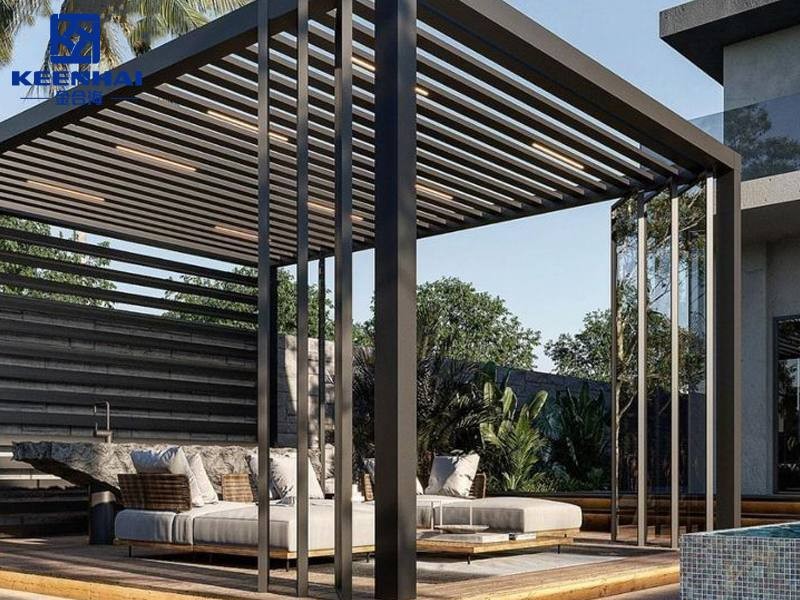
Designing an Aluminum pergola house for hot climates requires a focus on daily comfort and practical usability. Beyond material performance, the overall experience depends on airflow management, shading, and supplemental cooling strategies. Well-engineered pergolas integrate adjustable louvers, fans, and retractable screens to enhance comfort, allowing homeowners to enjoy outdoor spaces even during peak summer heat. Observations from installations in Nevada and Florida indicate that carefully positioned louvers can reduce perceived temperature under the pergola by up to 12°C, providing measurable relief in extreme sunlight conditions.
4.1 Cooling Performance with Fans, Screens, and Add-Ons
To maintain optimal comfort, consider 1. installing ceiling or portable fans to circulate air, 2. adding retractable side screens to block direct sun, and 3. integrating misting or evaporative cooling systems if necessary. Fans increase air movement, preventing heat from stagnating, while screens provide selective shading without obstructing views. When combined with an aluminum framework’s reflective surface, these enhancements can reduce the effective heat load by 25–30%. Homeowners in Phoenix have reported that using adjustable louvered systems in conjunction with supplemental cooling keeps outdoor dining areas comfortable during midday sun, making the pergola functional throughout the day.
4.2 Indoor–Outdoor Transition Temperature Differences
A critical factor for usability is the temperature differential between indoor spaces and the pergola-covered outdoor area. Measurements from field studies show that properly installed aluminum pergolas can maintain outdoor temperatures 6–10°C lower than adjacent unshaded patios. Key steps to maximize this benefit include:
-
Positioning the pergola to block western and southern sun exposure.
-
Optimizing louver angles throughout the day to reflect or diffuse heat.
-
Adding heat-reflective coatings on aluminum panels where possible.
By controlling these variables, residents experience a smoother transition between indoor comfort and outdoor living, reducing reliance on indoor cooling systems while still enjoying an open-air environment.
4.3 Real-World Comfort in Hot, Dry vs. Hot, Humid Regions
Environmental conditions significantly affect how aluminum pergolas perform. In hot, dry climates, the low humidity allows for rapid heat dissipation, making airflow and reflective surfaces the primary factors for comfort. Conversely, in hot, humid areas, stagnant air and higher dew points necessitate enhanced ventilation strategies, such as adjustable louvers or integrated ceiling fans, to maintain usability. Field data show that in humid Florida, louvered pergolas with side screens can reduce perceived temperature by 8–12°C compared to uncovered areas, while in Arizona, similar setups achieve 10–15°C relief due to increased heat reflection. This demonstrates the versatility of aluminum pergolas in adapting to different thermal challenges without compromising structural stability or outdoor usability.
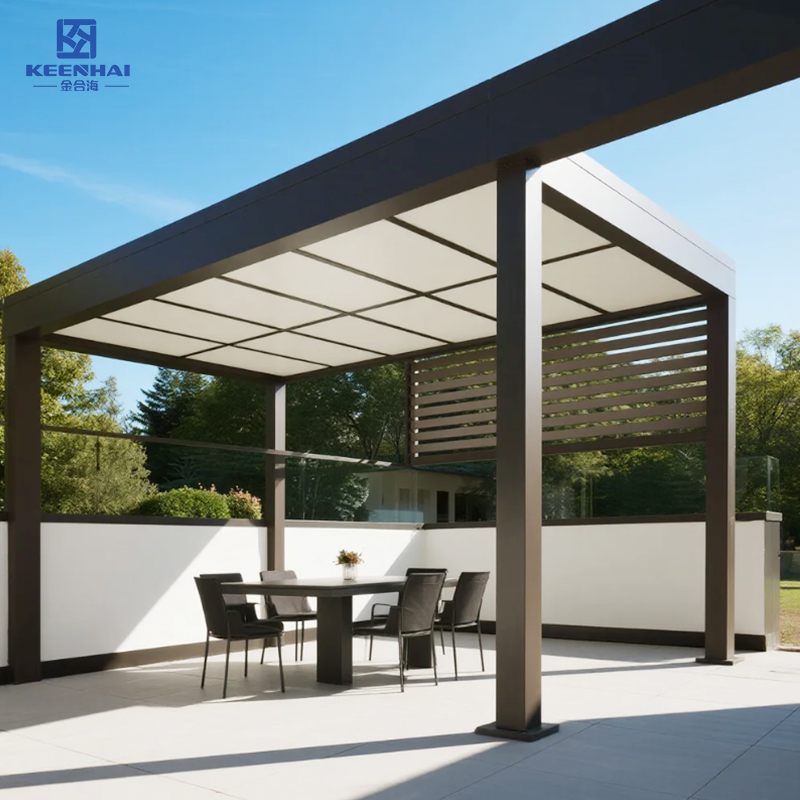
5. Energy and Cost Considerations in Hot Climates
Integrating an Aluminum pergola house into a hot-climate property can have significant implications for energy use and long-term costs. Beyond aesthetic appeal, these structures contribute to shading and airflow, which directly impact indoor cooling demand. Properly designed pergolas reduce solar heat gain through windows and patio doors, decreasing reliance on air conditioning and lowering energy bills. Studies from residential installations in Phoenix and Miami indicate that shading from an aluminum pergola can reduce indoor cooling costs by up to 15%, while also extending the lifespan of exterior finishes by protecting surfaces from UV degradation.
5.1 Potential Cooling Cost Reductions Near Windows or Patio Doors
Placing an aluminum pergola strategically near windows, sliding doors, or outdoor patios creates a buffer zone that absorbs and deflects direct sunlight. Key strategies include:
-
Aligning louvers to block peak afternoon sun.
-
Installing retractable screens to further minimize solar gain.
-
Maximizing shaded coverage over high-exposure areas.
Field data show that homes equipped with aluminum pergolas experience up to 10–15% reduction in energy bills during the hottest months, a measurable benefit that compounds over the lifespan of the structure. This makes the investment both practical and cost-efficient.
5.2 Energy Efficiency of Motorized Louvers in Managing Sunlight
Motorized or automated louvers provide precise sunlight control, enabling homeowners to adjust shade levels throughout the day. Unlike fixed roofs, motorized systems allow:
-
Dynamic shading based on solar angle.
-
Improved natural ventilation by opening louvers during peak heat.
-
Reduced dependency on AC systems, particularly in mid-afternoon hours.
Data from installations in hot regions show that motorized aluminum pergolas can lower peak cooling loads by 12–18%, especially when paired with reflective coatings on aluminum panels. This feature not only enhances comfort but also provides long-term energy savings.
5.3 Long-Term Maintenance and Heat-Related Wear Costs
Aluminum pergolas are inherently resistant to warping, rot, and corrosion, which significantly reduces maintenance costs compared to wood or steel structures. To maintain energy efficiency and structural integrity:
-
Regularly inspect louvers for alignment and debris buildup.
-
Apply protective powder coatings or anodized finishes to prevent UV-induced wear.
-
Check fasteners and hardware exposed to high temperatures for signs of loosening.
Over a 15–20 year lifespan, aluminum pergolas demonstrate a lower total cost of ownership in hot climates due to minimal upkeep, durability, and reduced energy expenditures, confirming their practicality for both comfort and budget-conscious homeowners.